
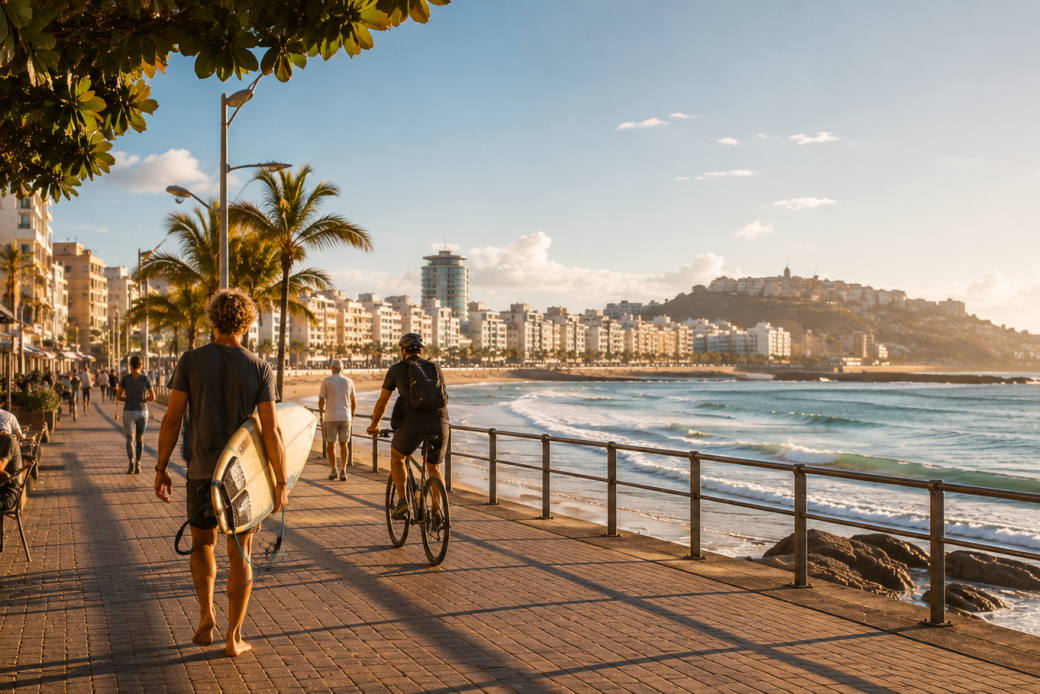
Looking for a digital nomad base in Gran Canaria? Las Palmas de Gran Canaria is the strongest all-round choice for many remote workers, thanks to its beachside neighborhoods, city services, coworking options and international community. The island’s south –especially Maspalomas, Meloneras and Arguineguín– suits people who want more sunshine, outdoor time and coastal amenities. Telde, Arucas and the inland towns offer a more local rhythm, extra space and a different way to shape the week.
This guide compares living costs, neighborhoods, internet and coworking, transport, climate and everyday lifestyle across Gran Canaria. By the end, you will know which base suits your budget, work setup and after-work routine, whether that means a swim before work, a highly social city base or a quiet home office with mountain views.
The quick answer: which part of Gran Canaria fits your digital nomad week?
Gran Canaria works best when you choose a base by the routine you want to enjoy every week. Do you want your favorite café, workspace, beach and supermarket within the same neighborhood, or would you rather prioritize space, sunshine and weekend exploration? Your answer will point you toward the right part of the island.
| Base | Your likely routine | Work and community fit | Cost direction |
|---|---|---|---|
| Las Palmas de Gran Canaria | City services, beach walks, cafés and an international rhythm | Strongest all-round base for coworking and meeting people | Medium-high; coastal pockets usually sit higher |
| Maspalomas, Meloneras and Playa del Inglés | Sunny, outdoors-focused, resort-style coastal living | Coworking and hospitality workspaces, especially around Maspalomas | Medium-high to high in the most sought-after coastal areas |
| San Agustín and Arguineguín | A residential coastal routine with time by the sea | Home office plus selected workspaces and local plans | Medium-high, depending on the exact location |
| Telde and the east coast | Local life, airport access and a practical island position | A good base for planned outings in several directions | Often gives you more room in the budget |
| Arucas and northern towns | Green surroundings, local character and more space | Well suited to a home-office rhythm with occasional trips | Often more budget-friendly than the main coastal hubs |
| Santa Brígida, San Mateo and inland areas | Mountain views, focused work and nature-led free time | A strong fit for a well-equipped home office and flexible transport | Varies; space can be the main advantage |
If you want the shortest answer, choose Las Palmas for balance, the south for outdoor living, Telde for location and value, or the north and interior for space and local character.
What is the digital nomad Gran Canaria cost of living?
Your monthly budget will be shaped mainly by housing, location and the way you move around the island. A room in a shared home and a furnished apartment near the coast create very different versions of the same Gran Canaria lifestyle, so it helps to price the routine you actually want.
A current rent benchmark
In August 2026, Idealista reported an asking-rent benchmark of €14.6 per m² in Las Palmas de Gran Canaria. That works out to roughly €584 for 40 m² or €730 for 50 m² before utilities, using the city-wide benchmark as a simple planning reference. Individual homes vary according to furnishing, condition, floor, location and contract length. You can check the latest Idealista rent report and its price-report methodology before making a long-term decision.
The city also shows a useful neighborhood spread:
| Las Palmas area | Asking-rent benchmark, August 2026 |
|---|---|
| Puerto-Canteras | €16.9/m² |
| Centro | €13.9/m² |
| Vegueta-Triana | €12.6/m² |
| Ciudad Alta | €12.6/m² |
These figures describe asking prices for listed residential properties; the final rent agreed between tenant and owner can differ. Furnished stays of a few weeks or months can follow a different pricing pattern, which is why a flexible first stay is useful when you are discovering the island.
Planning ranges for your first month
For one adult, the following broad ranges can help you create a first budget. They are practical planning figures rather than fixed tariffs; your work setup, social plans and accommodation style will move the total up or down.
| Monthly item | Shared-home base | Private Las Palmas base | Private south-coast base | What shapes the figure |
|---|---|---|---|---|
| Housing | €350–550 for a room | €700–1,050 for a small apartment | €900–1,250 for a small apartment | Area, furnishing and stay length |
| Food | €220–320 | €220–320 | €220–320 | Home cooking, local shopping and meals out |
| Utilities and internet | €0–140 | €70–140 | €70–140 | Whether bills are included and the connection available |
| Transport | €15–120 | €15–120 | €15–120+ | Bus use, intercity trips and occasional car hire |
| Coworking | €0–230 | €0–230 | €0–230 | Day passes, flexible access or a monthly membership |
| Social life and activities | €150–300 | €150–300 | €150–300 | Sport, culture, restaurants and weekend plans |
As a broad reference, sharing in Las Palmas can fit a €900–1,300 monthly plan, while living alone in the capital can sit around €1,200–1,750. A private south-coast lifestyle with regular car use can reach approximately €1,400–1,950. These ranges follow the local cost picture outlined in WanderPad’s local cost breakdown for living and working remotely in Gran Canaria, so you can use them as a starting point and adjust them to your own routine.
How to align your budget with your lifestyle
Start by choosing the experience you want your budget to support. If community and walkability matter most, putting more of the budget into a well-located room in Las Palmas can create more value than choosing a larger home farther away. If you picture beach time, outdoor sports and island exploration, a south-coast home plus occasional car hire may be the combination that feels most natural.
For your first weeks, compare:
- A furnished room or apartment with bills clearly explained.
- A home with a desk, comfortable chair and a work-friendly internet connection.
- A location close to the places you expect to visit every week.
- A flexible stay that gives you time to experience the neighborhood before choosing a longer contract.
Where to live in Gran Canaria as a digital nomad
Gran Canaria is the island, while Las Palmas de Gran Canaria is the capital city in the northeast. They answer different lifestyle preferences: the capital offers the most concentrated city-and-beach routine, while the rest of the island opens up coastal towns, inland landscapes and a more local pace. Choose your island base first, then explore the neighborhood details.
Living in Las Palmas de Gran Canaria: the all-round city base
Living in Las Palmas de Gran Canaria gives you the clearest blend of urban services, beach access, coworking, cafés, culture and community. It is often the easiest first base if you are arriving alone, want a varied social calendar or enjoy doing most daily errands on foot, by bike or by city bus.
- Las Canteras and Guanarteme: a natural fit if you want the ocean, a promenade, cafés, surf culture and a strong international rhythm close to home. It is one of the most recognizable bases for people combining remote work and beach time, a work-and-surf rhythm reflected in Las Palmas’ deep-work and surf culture.
- La Isleta and Santa Catalina: good choices if you enjoy a neighborhood feel with access to the port, the beach and the city’s northern activity. This area can make it easy to mix local routines with spontaneous plans.
- Vegueta and Triana: ideal for a historic setting, independent shops, restaurants, culture and a more city-centered daily rhythm. Choose this side of town if you prefer architecture, food and local life as part of your everyday experience.
- Alcaravaneras, Arenales and Mesa y López: practical central options with services, sports facilities, shopping and convenient connections across the city. They work well when your priority is a balanced base with easy logistics.
Maspalomas, Meloneras and Playa del Inglés: a south-coast outdoor base
The south of Gran Canaria is a strong match if your ideal week includes sunny afternoons, long walks, sport, outdoor cafés and easy access to coastal plans. Maspalomas and Meloneras offer a polished coastal setting with restaurants, services and the dunes nearby. Playa del Inglés brings a lively, international atmosphere with plenty of places to eat, socialize and organize an active week.
This part of the island suits you if you want your free time to happen outdoors. It is also home to work-friendly options such as OceanWorking in Maspalomas and Coworking Bahía Feliz, giving remote workers ways to change scenery while staying close to the coast.
San Agustín and Arguineguín: a repeatable coastal routine
San Agustín and Arguineguín can feel especially appealing when you want the sea close by and a residential rhythm you can repeat week after week. They offer a coastal base with local services, restaurants and outdoor space, while the southern hubs remain within reach for coworking, sport and social plans.
Choose this stretch of coast if you like starting the day near the water, working from a comfortable home setup and keeping your evenings open for walks, swimming or a relaxed dinner. It is a good middle ground between the energy of the larger south-coast hubs and a more settled daily pace.
Puerto de Mogán: small-scale coastal living
Puerto de Mogán is a charming option for people who want a compact, scenic base with a slower coastal rhythm. It can work beautifully for a focused home-office routine, especially when your priorities are a pleasant setting, morning walks and a clear separation between work time and free time.
This base is a good fit for a longer, more self-directed stay. Add transport planning to your checklist so you can connect your home routine with the wider island, coworking days and weekend discoveries.
Telde and the east coast: location and local life
Telde offers a practical position between Las Palmas, Gran Canaria Airport and the south, with a more local atmosphere and several everyday services close at hand. Coastal areas such as Melenara and Salinetas bring the sea into the routine, while the town center provides a useful base for daily errands and local life.
Choose Telde if you want a central island position, more budget room and the freedom to explore in different directions. It is particularly useful for people who want a balance between the capital and the south while keeping both within reach.
Arucas and the north: green surroundings and local character
Arucas combines historic architecture, services and a northern setting close to Las Palmas. Other northern towns, including Agaete and Gáldar, offer their own versions of island life, with landscapes, local food and a stronger sense of place woven into the week.
This area suits you if your home office is part of the lifestyle you want to create and you value space, calm surroundings and a closer connection to local communities. A car can add extra flexibility for beach days, mountain routes and exploring the north at your own pace.
Santa Brígida, San Mateo and the interior: space and a different climate
The interior gives you a different Gran Canaria experience, with mountain views, green landscapes, fresh evenings and a nature-led routine. Santa Brígida and the Vega de San Mateo are attractive starting points if you want to work from a spacious home, cook more often and use your free time for walks, cycling or inland exploration.
The key decision here is the relationship between your home and the rest of the island. If you enjoy a quieter base and have a flexible schedule, the interior can make your workweek feel especially spacious. A car is a valuable addition when you want to connect regularly with the coast or capital.
Remote work in Gran Canaria: internet, coworking and community
A destination becomes a strong remote-work base when your workday and your social life can coexist naturally. Gran Canaria offers its most concentrated digital-nomad ecosystem in Las Palmas, beachside workspaces in the south and a more independent home-office lifestyle in the north, east and interior.
Internet and home-office setup
Before confirming a home, ask for the details that will shape your working day:
- The connection: confirm the available fixed line, expected speed and the router’s location.
- The workspace: look for a proper desk, a comfortable chair, natural light and enough room for your equipment.
- Your calls: check where you will take meetings and how the home sounds during your usual work hours.
- Your flexibility: keep a coworking day pass or mobile-data option available so you can choose the best setting for important workdays.
- Your schedule: if your clients or team are abroad, map your meeting times against local island time before booking.
The exact address matters more than a general statement about an entire neighborhood. A quick video call from the property, a screenshot of the internet plan and a clear view of the desk can give you much more confidence before you arrive.
Coworking options by base
Las Palmas has the broadest choice of work settings. You can explore Tigotan Hub near Las Canteras, NAS Coworking in La Isleta and Cool Beans in Vegueta. Together, they represent different ways to structure the day: a dedicated coworking hub, a neighborhood workspace and a café-led creative environment.
In the south, OceanWorking in Maspalomas and Coworking Bahía Feliz offer further ways to combine focused work with the coast. Check each provider’s current access, hours and membership options before you make a booking. For a wider view of the island’s work-friendly places, WP Spaces helps you compare options by location and the kind of day you want to create.
Build the community side of your week
The most enjoyable community usually grows through repetition. Choose one anchor workspace, one recurring activity and one local place you return to each week. That could mean a coworking morning, a surf lesson, a run, a language exchange, a market or a weekend hike. The WanderPad app can help you keep those discoveries connected to the routine you are building.
This is where WanderPad’s approach is especially useful: the goal is to help you arrive, choose what to do first and start building a life in the destination, with places and people that make the island feel familiar.
Getting around Gran Canaria as a digital nomad
Transport should match your base and the kind of island life you want to enjoy. Las Palmas is especially convenient for a walking-and-bus routine, while a car adds freedom for inland homes, remote beaches, trailheads and flexible weekend plans.
City and intercity transport
In Las Palmas, the official Guaguas Municipales fare page lists a €1.40 single journey and a €0.42 contactless journey with a minimum €8.50 top-up for that travel card. The exact ticket that suits you depends on how often you use the network and your eligibility for available passes.
For travel between municipalities, Global provides intercity services and different payment options. This makes Telde, Arucas and several coastal bases practical choices when you plan your regular destinations around the available routes.
Arriving and exploring
Most international arrivals use Gran Canaria Airport (LPA). The official Aena airport page includes information about intercity buses, taxis and car hire, so it is a useful starting point when planning your arrival.
You can begin in Las Palmas with public transport and add occasional car hire for island days, or choose a car from the start if you are basing yourself in the interior. The right choice depends on whether your ideal week is centered on one walkable area or includes regular coastal and mountain exploration.
When is the best time to live in Gran Canaria?
Gran Canaria is a year-round destination, and the best time to move depends on the routine you want to enjoy. Winter is especially attractive if you want outdoor time while much of Europe is cooler. Spring and autumn often create a comfortable balance between work, beach days and island exploration. Summer brings long, bright days and an energetic coastal atmosphere.
The island also has several microclimates. AEMET’s 1981–2010 climate normals for Gran Canaria Airport record an average temperature of 17.9°C in January, 24.6°C in August and 21.1°C across the year at that station. These figures are a useful reference point, while your experience will vary with the coast, altitude and orientation of the area you choose.
That variety is part of the appeal: the south can suit a sun-first routine, the north brings greener landscapes and the interior gives you a cooler, more nature-focused setting. Choose the climate around the life you want after work, alongside the season on the calendar.
Practical arrival planning for a digital nomads
Your first decision can remain flexible throughout your stay. A thoughtful arrival plan lets you test a neighborhood, understand your working rhythm and choose your longer-term base with real experience.
Start with a flexible first stay
Consider booking your first two to four weeks in a furnished room, apartment or coliving space. Use that time to compare:
- Your real distance to the beach, supermarket, workspace and transport.
- How the home supports video calls and focused work.
- Which places you naturally return to during the week.
- How much you want city energy, coastal calm or inland space.
This approach turns the first month into part of the destination experience. By the time you choose a longer home, you will have a clearer picture of the neighborhood that fits your own version of Gran Canaria.
Check the residence route that applies to you
If you are a non-EU/EEA citizen planning to work remotely from Spain, review the current requirements for Spain’s international teleworker authorization, often called the digital nomad visa. The official PRIE information for digital nomads is a useful starting point, alongside the Spanish consulate or official authority relevant to your situation. Requirements can change, so check the current rules before you make a long-term move.
The ultimate digital nomad Gran Canaria checklist before choosing your base
Before you book, give yourself a few minutes to answer these questions:
- What should your weekday feel like? Beach-first, city-centered, local and spacious or focused on nature?
- Where will you work most days? At home, in coworking spaces, in cafés or through a flexible mix?
- What is your complete monthly budget? Include rent, utilities, food, transport, coworking, activities and the occasional island day.
- Which places will you visit every week? Use that answer to choose a location with a comfortable daily rhythm.
- What community touchpoint will you try first? A coworking day, a class, a sport, a market or an event can become your first local anchor.
- How much flexibility do you want? A short initial stay gives you room to discover the version of Gran Canaria that suits you best.
The best decision is usually the one that makes your ordinary Tuesday feel as appealing as your first weekend.
Turn Gran Canaria into a place that feels like yours
The best base is the one that makes your regular week easy, energizing and genuinely enjoyable. Start with the area that matches your budget and your preferred rhythm, give yourself time to discover the local details, and let the places you return to guide your next decision.
WanderPad can help you make those first weeks more connected, but the choice remains yours: follow the places that make your workday flow and the routines that make the island feel familiar. Your next base may begin with a map, but it becomes home through the people, places and routines you choose to repeat.
Frequently asked questions about living in Gran Canaria as a digital nomad
Is Gran Canaria good for digital nomads?
Yes. Gran Canaria combines mild weather, reliable city services, coworking options, outdoor activities and an international community. Las Palmas is the most complete base for a first stay, while the south, north and interior let you design a more specific lifestyle.
Where is the best place to live in Gran Canaria?
The best place to live in Gran Canaria depends on your priorities. Las Palmas de Gran Canaria is the best all-round choice for many people, especially if you value coworking, community, beaches and city services. Maspalomas and the south work well for outdoor living; Telde offers a practical position; and the north or interior suit a quieter, more spacious routine.
What is the best area in Las Palmas for remote work?
Las Canteras and Guanarteme are strong choices if you want the beach, cafés, surf and an international community close to home. Vegueta and Triana suit a historic, culture-led routine, while Alcaravaneras, Arenales and Mesa y López offer central services and connections. The best match comes down to how you want your workday to flow.
How much does it cost to live in Gran Canaria?
For one adult, a shared-home plan in Las Palmas can sit around €900–1,300 per month, while living alone in the capital can reach €1,200–1,750. A private south-coast lifestyle with regular car use may sit around €1,400–1,950. Housing, contract length, coworking and transport are the largest variables.
Is remote work in Gran Canaria practical?
Yes. Remote work in Gran Canaria can work very well when your accommodation has a confirmed connection and a comfortable desk, and when you choose a coworking option that fits your schedule. Las Palmas offers the broadest concentration of workspaces; the south has beachside options; and other parts of the island suit a well-equipped home office.
Do you need a car in Gran Canaria?
A car is optional in some city-centered routines and especially useful for inland living, mountain routes and frequent island exploration. Las Palmas has municipal buses, while intercity connections link the main towns. Many people begin with public transport, add occasional car hire and then choose the combination that matches their weekly plans.
What is the best time to move to Gran Canaria?
Gran Canaria works throughout the year. Choose winter if you want a warm outdoor routine while northern Europe is cooler, spring or autumn for a balanced work-and-exploration rhythm, and summer for long days by the coast. The island’s microclimates also let you choose between sunny coastal areas, greener northern surroundings and cooler inland settings.