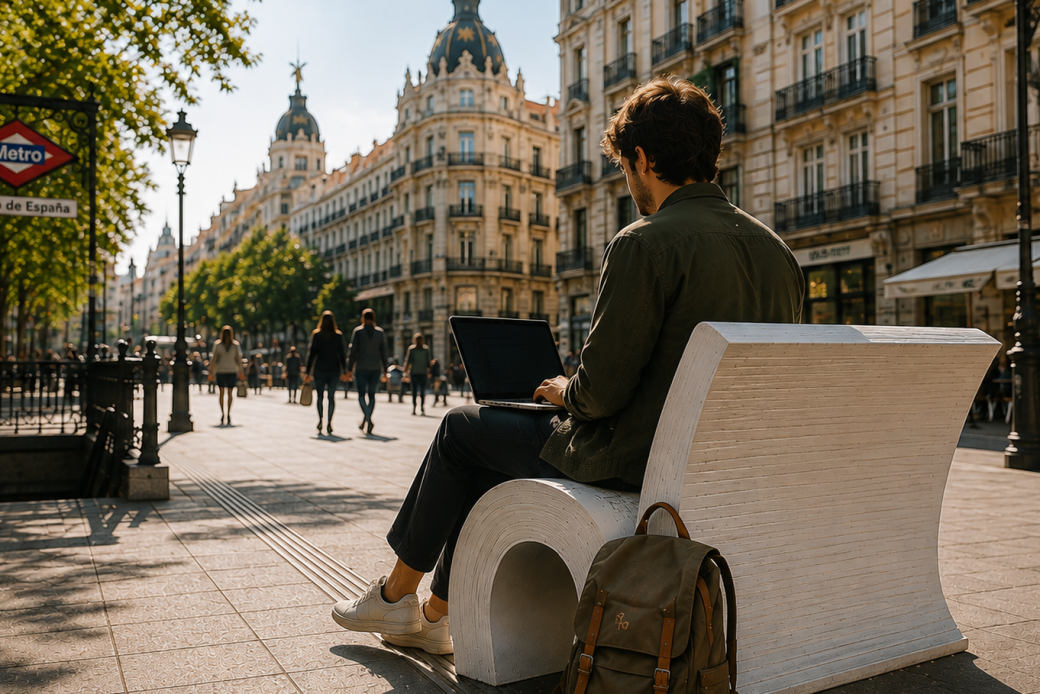
Living in Madrid as a digital nomad gives you a well-connected capital, a varied professional network and a full calendar of culture, food, events and outdoor plans. Madrid is inland, so its appeal comes from city energy, national connections and the different routines you can build within the same urban area.
The best area depends on what you want from your week. Chamberí and Centro suit people who want cafés, culture and walkability, while Retiro, Arganzuela, Tetuán, Ciudad Lineal and Moratalaz offer different combinations of parks, transport, space and monthly cost.
Would you rather step out of your apartment and be close to meetings, museums and restaurants, or have more space near a park and connect with the center by metro? This guide compares Madrid’s costs, neighborhoods, transport, housing and everyday lifestyle so you can choose a base that feels right for you.
The quick answer: is Madrid a good base for digital nomads?
Madrid is a strong choice if you value professional connections, fast transport, cultural variety and plenty of options after work. It suits remote workers who enjoy meeting people from different industries, attending events and traveling around Spain.
| Area | A good fit if you want… | What daily life can feel like | Asking rent reference* |
|---|---|---|---|
| Centro | Walkability, culture and social plans | Historic streets, cafés, restaurants, museums and quick access to almost everything | €26.00/m² |
| Chamberí | A central neighborhood routine | Independent cafés, local businesses, attractive streets and a comfortable position between the center and the business district | €25.80/m² |
| Retiro | Green space and a more settled rhythm | Easy access to El Retiro, the Paseo del Prado, central transport and quieter residential streets | €23.80/m² |
| Tetuán | Metro connections and city convenience | A diverse, well-connected base close to the AZCA and Castellana business areas | €22.90/m² |
| Ciudad Lineal | Everyday practicality and more room | A residential setting with metro access, local services and a direct connection to the center | €20.00/m² |
| Moratalaz | A greener, more local routine | Parks, neighborhood life and a more spacious feel while remaining connected to central Madrid | €17.30/m² |
*These are advertised-rent references from Idealista’s August 2026 Madrid index, not fixed prices for every apartment. The figures vary by street, size, furnishing and lease length.
The table is a useful starting point, but Madrid has many more combinations. Arganzuela and Delicias work well for people who like Madrid Río, Atocha and a city setting with room to breathe. La Latina, Lavapiés and Embajadores bring culture, food and an international atmosphere, while Salamanca and Chamartín offer a polished residential base with strong services. If you prefer a city-and-coast balance, living in Valencia as a digital nomad offers a very different weekly rhythm.
If you want to compare Madrid with other Spanish lifestyles before deciding, the wider guide to the best places to live in Spain can help you place the capital alongside coastal cities and island destinations.
How much does it cost to live in Madrid?
Housing will shape most Madrid budgets. Idealista’s August 2026 rental index for Madrid placed the city at €23.30 per square meter per month, with higher references in central districts and more accessible figures in areas such as Moratalaz, Vicálvaro or Villa de Vallecas.
That citywide figure gives you useful context, but a remote worker usually searches for a room, studio or one-bedroom apartment rather than an average-sized property. Use the following ranges to build a first budget:
| Monthly expense for one person | Practical planning range |
|---|---|
| Room in a shared apartment | €550–€950 |
| Private studio or one-bedroom apartment | €1,100–€1,900+ |
| Utilities and internet | €100–€180 |
| Groceries | €250–€450 |
| Public transport | €30–€70 |
| Coworking or workspaces | €100–€300 |
| Leisure, sports and activities | €180–€400 |
As a planning guide, sharing an apartment may place your monthly budget around €1,250–€1,850, while living alone can bring it closer to €1,850–€2,800. A central furnished apartment, a short stay or a home with a dedicated office can move the total upwards, while sharing or choosing a well-connected outer neighborhood can give you more flexibility.
Madrid is a city where your location can change your budget and your routine at the same time. Before comparing two apartments only by rent, ask yourself: how much time will each one save me, and which parts of the city will I actually use?
Which areas of Madrid suit your lifestyle?
Madrid is made up of distinct neighborhoods, so choosing a base is less about finding one universally “best” area and more about matching your surroundings to your week. Madrid’s official neighborhood overview is a useful way to understand the city’s main districts and local character.
Centro, Malasaña and Chueca
Choose the central neighborhoods if you want restaurants, galleries, cultural venues, cafés and social plans within walking distance. Malasaña and Chueca have a creative, international energy, while Sol, Gran Vía and La Latina keep you close to Madrid’s historic core.
This suits you if you enjoy having plans close by and want to meet people without relying on long commutes. Homes are often more compact, so check the workspace, natural light, storage and noise level as carefully as the location.
Chamberí and Salamanca
Chamberí offers central access and neighborhood life, with cafés, restaurants, local shops and the Castellana business area within easy reach.
Salamanca brings excellent services, shopping and restaurants in a more elegant residential setting, particularly suited to a higher housing budget.
Retiro, Ibiza and Arganzuela
These areas make it easier to include green space in your daily routine. Retiro and Ibiza put one of Madrid’s best-known parks at the center of your week, while Arganzuela and Delicias connect city living with Madrid Río and Atocha.
Madrid’s official parks and gardens guide highlights El Retiro, Casa de Campo and Madrid Río. For a remote worker, a park can become part of your morning, lunch break or post-work routine.
Tetuán, Cuatro Caminos and Chamartín
If transport and professional connections are high on your list, look towards Tetuán, Cuatro Caminos and Chamartín. These areas connect you with the Castellana and AZCA business districts, metro lines, local services and different apartment styles.
Tetuán changes from one street to the next, so explore the immediate surroundings. Chamartín offers a quieter residential base with excellent rail connections, while Ciudad Lineal and Moratalaz can give you more space and a neighborhood-focused routine. Would you use the extra space, or pay for being closer to the plans you enjoy most?
What is daily life like in Madrid for digital nomads?
Madrid combines a focused workday with a wide range of ways to spend your time afterwards. You can work from home, a coworking space or a laptop-friendly café, then move to a language exchange, a gallery, a gym, a concert or dinner with very little planning.
A city built around connections
Madrid is one of Spain’s main professional and cultural hubs. The airport is around 30 minutes from the city center by public transport, and rail connects the capital with major Spanish cities as well as Portugal and France.
The city also gives you several ways to build community. A recurring coworking day, professional event or sports class can help you recognize familiar faces and build a routine around your interests.
Moving around without a car
Madrid’s metro, buses and commuter trains make it possible to live centrally without owning a car. The official Madrid transport guide describes the city’s network, while the Regional Transport Consortium’s 30-day pass information lists prices by zone and user profile.
As of September 2026, the normal 30-day pass for zone A is listed at €32.70, with other prices depending on the zones and profile. Choosing a neighborhood close to a metro or Cercanías station can make the city feel much smaller.
Parks, culture and everyday plans
Madrid’s green spaces add variety to an inland city routine. El Retiro, Madrid Río, Casa de Campo and smaller neighborhood parks give you room for walking, sport or a slower afternoon, while museums, cinemas, theaters, concerts and restaurants fill the city calendar.
You do not need to fill every day. Choose two or three recurring activities that genuinely interest you, and let the rest of the city unfold gradually.
Climate and the home you choose
Madrid has bright, hot summers and cooler winters, so the apartment itself matters. Ask about air conditioning, heating, window orientation and insulation. If your ideal after-work plan includes the coast, living in Málaga as a digital nomad offers another Spanish lifestyle to compare.
Paperwork for living in Madrid as a digital nomad
Your paperwork depends on your nationality, stay length and who you work for. EU, EEA and Swiss citizens follow a different registration framework from non-EU nationals, while eligible travelers from outside the EU generally use short-stay rules for up to 90 days in any 180-day period.
For non-EU remote workers, Spain’s international teleworker route is intended for eligible third-country nationals working remotely for companies based outside Spain. The Unit for Large Companies and Strategic Collectives sets out the route and documentation. Review the current requirements before booking a long-term home.
Spain’s official visa and passport guidance is a useful starting point for entry rules. Tax residence, healthcare, social security and work authorization depend on your circumstances, so consider professional advice for a long-term move.
How to choose a work-friendly Madrid base
Madrid supports different remote-work styles, from a quiet home office to coworking and laptop-friendly cafés. When you arrive, the WanderPad app can help you discover verified workspaces and connect with people in the local nomad community.
Before you commit to a neighborhood, ask yourself whether your working day, errands and plans after work fit into the same weekly rhythm:
- Mark three anchors: Your home, usual work location and main transport connection.
- Walk the surrounding streets: Check the real distance to shops, cafés, parks and public transport.
- Review the agreement: Confirm the lease length, deposit, utilities, internet and inventory.
- Test the work setup: Ask about Wi-Fi, heating, air conditioning, light and the desk.
- Leave room to explore: A flexible first stay can help you discover which part of Madrid feels most natural.
Build a Madrid routine that feels like yours
Madrid works best when you choose the city around your actual week. A central apartment can bring plans within walking distance, while a greener neighborhood can give you more space and a calmer rhythm. The right decision is the one that supports how you work, connect and spend your time.
Start with your priorities, compare the areas that match them and give yourself time to discover the city beyond the first neighborhood you visit. If island life is your stronger draw, living in Gran Canaria as a digital nomad offers a very different way to shape your week. Madrid, meanwhile, gives you enough variety for your base to evolve with you.
FAQs about living in Madrid as a digital nomad
Is Madrid a good city for digital nomads?
Yes. Madrid suits digital nomads who value professional opportunities, cultural variety, reliable transport and an active social calendar. It offers different neighborhood styles, from central and highly walkable to greener and more residential.
What is the best area to live in Madrid as a digital nomad?
Chamberí, Centro, Retiro, Arganzuela, Tetuán and Ciudad Lineal are useful starting points, depending on your priorities. Choose Centro or Chamberí for walkability and plans, Retiro or Arganzuela for green space, and Tetuán or Ciudad Lineal for transport and a more flexible neighborhood routine.
How much money do I need to live in Madrid?
A remote worker sharing an apartment can start with a monthly planning range of €1,250–€1,850. Living alone may bring the total closer to €1,850–€2,800, depending on rent, neighborhood, utilities, transport, workspaces and leisure.
Can I live in Madrid and work remotely for a foreign company?
Eligible non-EU applicants may use Spain’s international teleworker route when they meet the requirements. EU, EEA and Swiss citizens follow different rules. Your employer, client structure, nationality and intended length of stay all matter, so confirm the correct route before working from Spain.
Is Madrid easy to explore from?
Yes. Madrid has frequent rail and air connections with other Spanish cities and international destinations. That makes it a convenient base if you want to enjoy a large capital during the week and plan regular trips without changing your home base.