
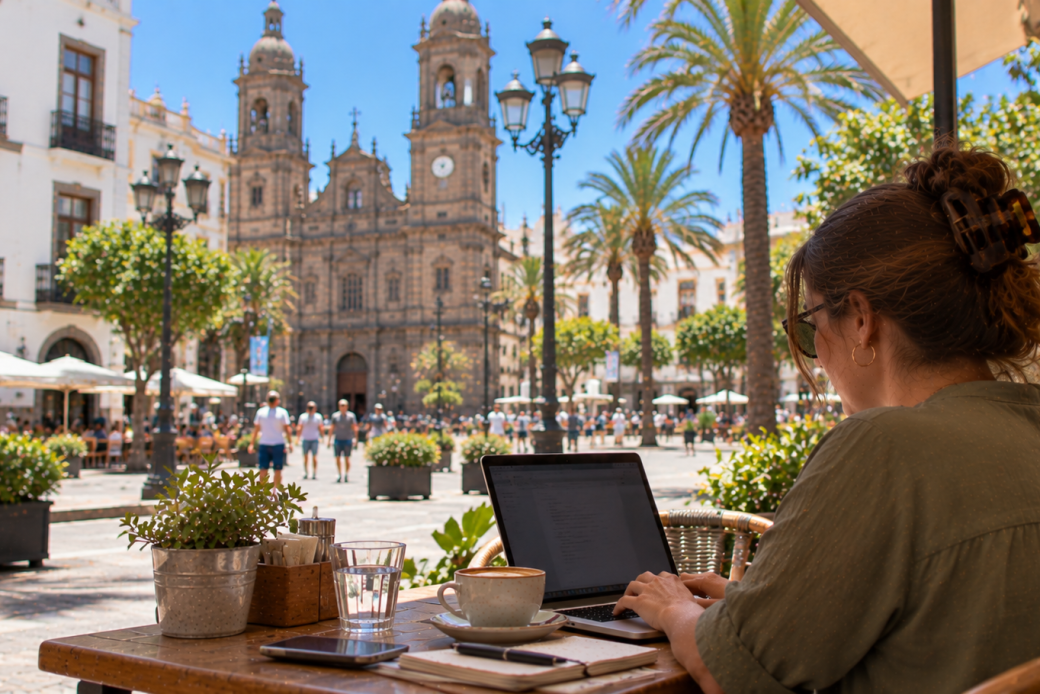
For a first stay without a car, Centro, El Toscal and La Salle are some of the easiest places to start. Centro and El Toscal make everyday life highly walkable; La Salle and Cabo Llanos bring the main transport hub and tram connections closer; Salamanca and Duggi balance a local feel with centrality; and Ifara offers more calm and space if you are comfortable with a hillier setting. If you want to make your budget go further, expand your search toward Cruz del Señor, Ofra or the southwest.
Have you already chosen Santa Cruz and now need to find the right neighborhood? This guide compares the best areas to live in Santa Cruz de Tenerife by rent, transport, walkability, everyday services and suitability for remote work.
The wider guide to living in Tenerife as a digital nomad compares Santa Cruz with La Laguna, Puerto de la Cruz, El Médano and the south. Here, we focus on the city itself so you can choose a specific address and build a week that feels easy to repeat.
The best areas to live in Santa Cruz de Tenerife at a glance
There is no single neighborhood that works best for everyone. The right choice depends on whether you want to walk most of the time, use the tram, reach the island’s main connections quickly or gain more space for the same budget.
| Your priority | Areas to explore first | Everyday mobility | Relative rent level |
| First stay and walkable city life | Centro, El Toscal and Los Hoteles | Walking and buses; tram access from Weyler or Teatro Guimerá | High |
| A balance between local life and centrality | Salamanca and Duggi | Walking, buses and the tram, depending on the street | Medium-high |
| Island connections and modern services | Cabo Llanos and La Salle | Main transport hub, tram and buses | Medium-high |
| Calm, residential housing and views | Ifara, Las Mimosas and Residencial Anaga | Bus or car, depending on elevation | High |
| Tram access with more room to search | Cruz del Señor and La Salud | Tram and urban buses | Medium |
| Prioritizing space or budget | Ofra and neighborhoods in the southwest | Mainly buses; a car can be useful in some areas | More moderate |
Administrative boundaries do not always match the names used in rental listings. Cabo Llanos, for example, may appear alongside Los Llanos or El Cabo. Locate each property on a map rather than filtering only by the commercial name of the area.
What changes between the neighborhoods of Santa Cruz de Tenerife?
The Santa Cruz de Tenerife City Council’s neighborhood map divides the municipality into five districts, but micro-areas are often more useful when you are choosing a home. Two streets in the same district can differ in slope, noise, access to the tram and the time needed to reach the main transport hub.
Centro, El Toscal and Los Hoteles: keep almost everything close
Centro concentrates shopping, restaurants, culture and everyday services. El Toscal keeps much of that proximity while adding a more neighborhood-oriented feel, and Los Hoteles and the Rambla offer a more residential atmosphere.
These are strong bases if you prefer to walk, especially during a first stay. Housing can sit at the higher end of the city’s range, so check the building as carefully as the location. Noise during your working hours, elevator access and natural light can make a bigger difference than a few extra minutes on foot.
Salamanca and Duggi: balance neighborhood life with the center
Salamanca combines everyday stores with a central location. Duggi sits close to Weyler, the Nuestra Señora de África Market and several urban connections. In both areas, a street near a direct stop or a walkable route can be more valuable than a small difference in rent.
These neighborhoods work well if you work from home but still want local activity just outside your door. Could you see yourself getting coffee, picking up groceries and reaching the city center without planning every trip?
Cabo Llanos and La Salle: practical bases for moving around the island
Cabo Llanos combines relatively recent buildings, services and proximity to the city’s waterfront. La Salle offers convenient access to the main transport hub, the tram and the roads leading out of Santa Cruz.
These areas suit you if you travel frequently or expect to combine the capital with La Laguna and other parts of Tenerife. They also support a routine without a car, although you should check the apartment’s orientation and how active the street feels outside business hours.
Ifara, Las Mimosas and Residencial Anaga: more space and a quieter setting
These areas offer a residential profile, a calmer atmosphere and, in some locations, open views. They can be a good fit if you need a separate room or a larger home office.
Elevation shapes the experience. An address that looks close to downtown may involve a noticeable hill, so walk the route to the nearest stop, supermarket and backup workspace before you commit. If you do not plan to drive, this small test can help you choose a home that supports your daily rhythm.
Cruz del Señor, La Salud, Ofra and the southwest: expand your search
Cruz del Señor and parts of La Salud keep the tram within reach while widening your search beyond Centro-Ifara. Ofra offers a more residential setting, while southwest neighborhoods such as El Sobradillo, La Gallega and Añaza can provide more space.
These areas create different routines, so compare the rent difference with the time and cost of your regular trips. A lower monthly figure can be especially useful when it gives you room for a comfortable workspace, coworking days or exploring more of Tenerife.
How much does it cost to rent in Santa Cruz de Tenerife?
The Idealista rental price report for Santa Cruz de Tenerife placed the municipality’s average asking rent at €14.0 per m² in September 2026. These are residential asking prices from listings, not final signed rents or guaranteed prices for furnished temporary stays.
| Reference district | Asking rent | Approximate calculation for 60 m²* | Areas it helps contextualize |
| Centro-Ifara | €14.8/m² | €888/month | Centro, El Toscal, Los Hoteles, Salamanca and Ifara |
| Salud-La Salle | €14.5/m² | €870/month | La Salle, Los Llanos, El Cabo, La Salud and Cruz del Señor |
| Ofra-Costa Sur | €12.0/m² | €720/month | Ofra, Chimisay and nearby neighborhoods |
| Santa Cruz Southwest | €11.1/m² | €666/month | El Sobradillo, La Gallega, Añaza and Santa María del Mar |
*The calculation multiplies each district’s average by 60 m² to make the comparison easier. It does not mean that a property of that size and price will be available. Condition, furniture, utilities and contract length can all increase the final rent.
Centro-Ifara and Salud-La Salle sit close together in the asking-rent comparison, so changing districts does not automatically create a saving. For a one-to-six-month stay, separate rent, included bills, deposit and move-in costs. A furnished and flexible home belongs to a different market from the residential listings used in the table.
Where to live in Santa Cruz de Tenerife without a car
Living without a car becomes easier when your home sits on a route that already matches your regular destinations. Tenerife’s tram Line 1 connects the Santa Cruz transport hub with La Laguna and passes useful stops such as Fundación, Teatro Guimerá, Weyler, La Paz and Cruz del Señor.
Areas that work well for a car-light routine
- Centro, El Toscal and Duggi: Walking covers many services, while several central stops provide access to the tram.
- Cabo Llanos and La Salle: The main transport hub makes it easier to combine city buses, island routes and the tram.
- Salamanca and Cruz del Señor: These can work especially well when you choose a street with straightforward access to Line 1.
- Ifara and Residencial Anaga: Depending on the exact address, you may use more buses, taxis or occasional car rental because of the slope and distance.
- Ofra and the southwest: The route matters more here, so check frequency and transfers before signing a lease.
If you expect to travel frequently, proximity to the main transport hub may matter more than living in the city’s geographical center. TITSA’s Line 20 connects Santa Cruz, La Laguna and Tenerife North Airport, while other services from the hub reach different parts of the island.
Check the home at two different times of day
A ten-minute viewing can show you the apartment, but it cannot show you the full routine. If possible, return once during your working hours and again in the late afternoon. You will get a clearer sense of noise, natural light, street activity and how easy it feels to walk or use public transportation.
Before paying a reservation fee, confirm:
- The real connection: Ask for a speed test from the room where you will work.
- The workspace: Check that the desk, chair and outlets support a full workday.
- The slope: Walk to the nearest stop and supermarket instead of measuring the route only in miles.
- The building: Review elevator access, ventilation, natural light and sound insulation.
- The lease: Clarify the duration, deposit, utilities, inventory and move-out conditions.
For remote work, the home should support both concentration and comfort. A well-connected neighborhood becomes much more valuable when the apartment itself gives you a reliable place to work.
From your chosen neighborhood to a local community
A well-connected address makes everyday life easier, but settling into a city also depends on the people and places you begin to recognize. With a profile on the WanderPad app, you can join communities and chats, find other digital nomads and remote professionals and turn an individual arrival into a local network.
The WanderPad Spaces network adds work-friendly places to that network. Choosing one near home gives you an alternative for calls or focused workdays and, when you return regularly, more opportunities to see familiar faces.
If you are comparing Santa Cruz with other Tenerife bases, the broader guide to living in Tenerife as a digital nomad puts the city alongside La Laguna, Puerto de la Cruz, El Médano and the south. Santa Cruz is the urban option; your neighborhood determines how that urban lifestyle feels from one day to the next.
The best area in Santa Cruz according to the way you want to live
Centro or El Toscal are the most complete options for a first stay if you want to walk. Cabo Llanos or La Salle stand out when transport connections matter most. Salamanca or Duggi balance local life and centrality; Ifara suits a calmer, more residential routine; and Cruz del Señor, Ofra or the southwest give you more options when budget or space comes first.
The final decision should come from a specific address rather than a general ranking. Compare the full rent, walk your two most frequent routes and check how you would work inside the home. The best neighborhood is the one that continues to feel comfortable once the city is no longer new.
Frequently asked questions about where to live in Santa Cruz de Tenerife
What is the best area to live in Santa Cruz de Tenerife?
Centro and El Toscal are versatile choices for a first stay because they put services, culture and restaurants within easy reach. La Salle or Cabo Llanos may suit you better if you will use the tram, the main transport hub or island connections regularly.
What are the most affordable areas in Santa Cruz de Tenerife?
In September 2026, the lower district-level asking-rent references were in Santa Cruz Southwest, at €11.1/m², and Ofra-Costa Sur, at €12.0/m². These are averages for residential listings and do not guarantee the price of a specific home or furnished temporary rental.
Which neighborhood in Santa Cruz is best for remote work?
El Toscal, Salamanca, Duggi and La Salle balance services, mobility and options for working outside the home. In any neighborhood, confirm internet speed, noise during your calls and whether the apartment has a suitable desk before booking.
Can you live in Santa Cruz de Tenerife without a car?
Yes. Centro, El Toscal, Duggi, La Salle, Cabo Llanos, Salamanca and Cruz del Señor let you combine walking with the tram or buses. In Ifara, Anaga and several parts of the southwest, the exact address can make a car more useful.
Is it better to live in El Toscal or Cabo Llanos?
El Toscal is a natural fit if you want a historic setting, a walkable routine and close access to the city center. Cabo Llanos is more practical if you prioritize newer buildings, the main transport hub and routes toward other parts of Tenerife. The stronger option depends on the journey you will repeat most often.
Choose the Santa Cruz routine you want to repeat
The best place to live in Santa Cruz de Tenerife is the one that supports the way you want to work, move through the city and spend your time after closing the laptop. Start with your preferred rhythm, compare the exact routes and give the home itself as much attention as the neighborhood.
Would you rather finish work with a walk through the historic center, have the tram close to home or enjoy more space in a quieter setting? Once you know which version of Santa Cruz fits you, the map becomes much easier to read.
The WanderPad English blog brings together more destination guides and practical ideas for remote workers building a routine in Spain. Use those resources alongside a short first stay, and let the places you naturally return to guide your final choice.