
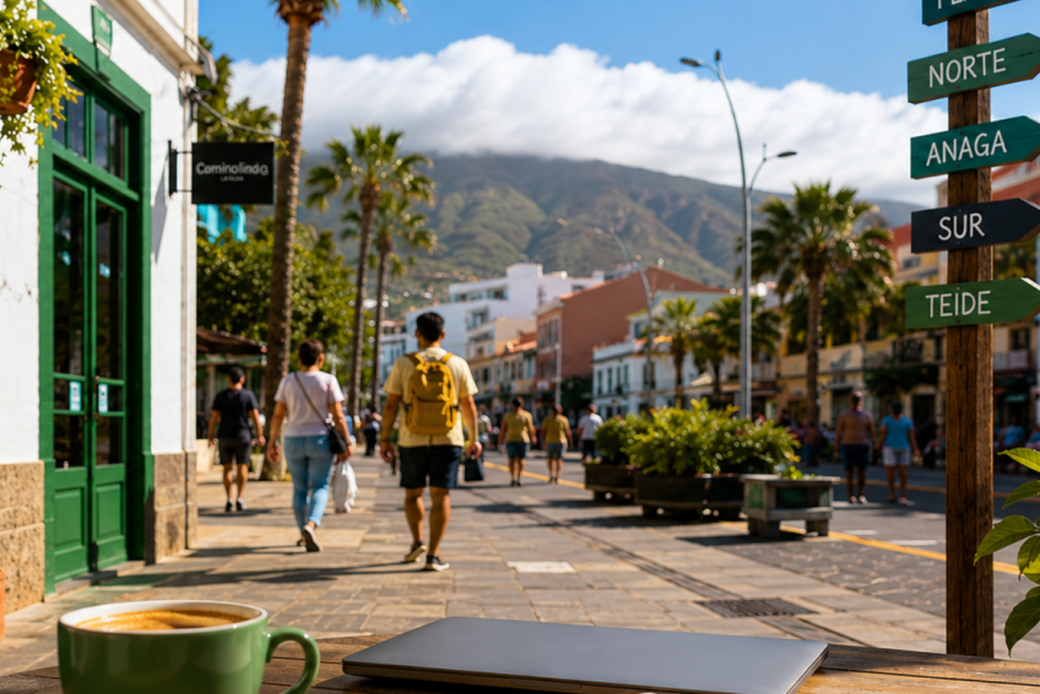
Looking for a digital nomad base in Tenerife? The best place to live and work on the island depends on the week you want to create. Santa Cruz de Tenerife and La Laguna suit people who value city services, culture and public transportation. Puerto de la Cruz and the northern towns bring greener landscapes and a more relaxed coastal rhythm. Los Cristianos, Costa Adeje and El Médano make it easy to build your free time around sunshine, the ocean and an international community.
This guide compares the cost of living in Tenerife, the north and south, remote-work setup, climate, transportation and community. It also puts the island in the wider context of the best places to live in Spain, so you can see how Tenerife compares with other destinations before deciding where to base yourself.
The quick answer: where should you live in Tenerife?
Tenerife is more varied than a simple north-versus-south choice. Altitude, transport links and the distance between your home and your favorite places can shape your experience just as much as the island’s climate. Start with the rhythm you want after work, then look at the location that supports it.
| Base | Your likely routine | Work and community fit | Budget direction |
|---|---|---|---|
| Santa Cruz de Tenerife and La Laguna | City services, cafés, culture and an organized weekly rhythm | Strongest public-transport and professional network | Mid-range city living, depending on the neighborhood |
| Puerto de la Cruz and Los Realejos | Green surroundings, coastal walks and a more local pace | Established international community and home-office options | A broad range, with different choices between town and coast |
| Los Cristianos and Costa Adeje | Sunshine, beaches, restaurants and an international routine | Coworking, activities and many ways to meet people | Usually higher in the most in-demand coastal areas |
| El Médano | Wind sports, beach time and an active outdoor lifestyle | Remote workers, sports communities and flexible workspaces | Mid-to-high, with location and season making a difference |
| Candelaria, Güímar and the east coast | Local coastal life, more space and a practical island position | A good fit for a home office and planned outings | Can offer more flexibility, especially away from the seafront |
If you want the shortest answer, choose Santa Cruz or La Laguna for connectivity, the north for greenery and a softer climate, the south for sunshine and international life, or El Médano for an outdoor, sea-led routine.
What does it cost to live in Tenerife?
The cost of living in Tenerife depends mainly on your housing choice, the area you select and how often you move around the island. A shared home in a well-connected neighborhood can create a very different monthly budget from a furnished apartment near the beach, so it helps to price the lifestyle you actually want.
A current rent benchmark
Idealista’s historical rental series for Santa Cruz de Tenerife province recorded an asking-rent benchmark of €14.1 per m² in August 2026. As a simple reference, that equals about €564 for 40 m² or €705 for 50 m² before utilities. These are advertised residential prices rather than guaranteed final rents, and furnished stays, contract length, demand and location can change the figure.
The Idealista rental-price history for Santa Cruz de Tenerife gives you a useful starting point when you compare locations. The methodology behind Idealista’s price reports also explains why these figures should be treated as market references rather than a promise for a particular home.
Local differences are meaningful. City areas such as Santa Cruz and La Laguna can offer a practical balance between services and housing, while the most popular coastal areas in the south often carry a higher asking price. Puerto de la Cruz, Los Realejos and nearby northern towns give you several ways to adjust the relationship between space, sea access and monthly rent.
Planning ranges for your first month
For one adult, these broad figures can help you build a first budget. They are planning ranges rather than fixed tariffs, so your accommodation, working habits and social plans will shape the total.
| Monthly item | Shared-home base | Private metropolitan or northern base | Private south-coast base | What shapes the figure |
|---|---|---|---|---|
| Housing | €450–750 for a room | €700–1,150 for a small apartment | €900–1,450+ for a small apartment | Area, season, furnishing and contract length |
| Food | €220–330 | €220–330 | €220–330 | Home cooking, local shopping and meals out |
| Utilities and internet | €60–120 | €60–170 | €60–170 | Whether bills are included and the connection available |
| Transport | €20–90 | €20–90 | €30–150+ | Transit use, intercity trips and occasional car hire |
| Coworking | €0–220 | €0–220 | €0–220 | Home working, day passes or a monthly membership |
| Social life and activities | €120–280 | €120–280 | €120–280 | Sport, culture, restaurants and weekend plans |
As a practical reference, sharing a home can fit a €950–1,400 monthly plan. Living alone in the metropolitan area or selected northern towns can sit around €1,250–1,850, while a private lifestyle in the most sought-after southern coastal areas can reach approximately €1,450–2,100.
How to make your budget work with your lifestyle
The most useful question is not only “How much rent can I pay?” but “Which parts of the Tenerife experience do I want my budget to support?” If you want to meet people easily and do daily errands on foot, a well-located room may create more value than a larger apartment farther away. If your priority is outdoor space and a calm home office, you may prefer to put more of the budget into the home and keep transport flexible.
Before choosing a long-term place, compare:
- A furnished room or apartment with bills clearly explained.
- A proper desk, comfortable chair and reliable internet connection.
- Your real distance to the supermarket, workspace, beach and regular activities.
- The cost of occasional car hire if you choose a base outside the main urban areas.
- A flexible first stay that lets you experience the neighborhood in different weather and at different times of day.
Which Tenerife lifestyle fits you best?
The best places to live in Tenerife are not interchangeable. Each area creates a different relationship between your workday, your home and the places you visit when the laptop closes. Which version feels most like the life you want to build?
Santa Cruz de Tenerife and La Laguna: urban, connected and easy to organize
Santa Cruz concentrates shops, services, culture, restaurants and everyday convenience throughout the year. It can be a strong first base if you want to arrive without a car, keep your plans flexible and have several ways to structure your free time. Neighborhoods near the center and the waterfront let you combine work, errands and city life without turning every plan into a long journey.
La Laguna offers a different kind of urban routine. Its historic center, university atmosphere, cafés and cooler temperatures create a setting with a strong local identity. You may enjoy it if you want your week to include independent businesses, walkable streets and a little more space for focused work.
The tram connects Santa Cruz and La Laguna, making it natural to live in one city and use the other regularly. This metropolitan area is particularly useful if your version of living in Tenerife, Spain includes reliable services, public transportation and a community that is active beyond the main tourist season.
Puerto de la Cruz and Los Realejos: green surroundings and coastal calm
Puerto de la Cruz combines the sea, restaurants, local businesses and an international community in a manageable coastal setting. It can suit you if you want to live near the ocean while keeping a clear sense of place around your home, rather than choosing a purely resort-style environment.
Los Realejos brings a more residential feel and easier access to northern landscapes, viewpoints and walking routes. La Orotava adds historic character and a quieter, nature-connected routine, with coliving and work-friendly options in the surrounding area.
The north is a natural fit if green landscapes, fresh evenings and a home-office rhythm appeal to you. The weather is part of that choice: AEMET’s climate normals show a cooler and wetter pattern at Tenerife Norte Airport, which sits at 632 meters in La Laguna, than at the southern airport.
Los Cristianos and Costa Adeje: sunshine, services and international life
The south gives your free time an outdoor shape. Los Cristianos offers a promenade, restaurants, services, beaches and connections to other parts of the island. Costa Adeje adds a broad choice of leisure, dining and coastal activities, while nearby areas let you look for a more residential setting within the same southern network.
This is a strong match if you want sunny afternoons, a visible international community and easy access to the coast. You can finish work and walk by the water, join an activity or meet friends without planning the whole day around a long journey.
The most in-demand southern areas can also have a higher housing benchmark, especially when you are looking for a furnished apartment close to the sea. Comparing Los Cristianos, Costa Adeje, Adeje town and nearby neighborhoods can help you choose the version of southern Tenerife that fits your budget.
El Médano: wind sports, airport access and an active outdoor identity
El Médano has a distinct personality. The wind, beach and water sports shape the atmosphere, and the town attracts people who want to include movement and outdoor plans in their normal week. It can be a good base if you enjoy kitesurfing, windsurfing, beach walks or a social routine that grows around shared activities.
Its position near Tenerife South Airport can also be practical for people who travel regularly. At the same time, the windier conditions are part of the experience, so consider how they fit your preferred home setup, outdoor time and calls from home.
Candelaria, Güímar and the east coast: local life and flexible space
Candelaria and Güímar offer coastal routines with a stronger local feel and a practical position between the metropolitan area and the south. They can suit you if you want more space, a quieter home base and the freedom to explore in both directions.
This side of the island works especially well when you have a comfortable home office and do not need to commute every day. A car can make beaches, inland villages and weekend plans easier, while the towns themselves provide the basic rhythm for everyday life.
North or south Tenerife: which is better for remote work?
Neither side is universally better. The north tends to suit people who value greenery, local character and a cooler atmosphere, while the south appeals to those who want more sun, coastal amenities and an international routine. Santa Cruz and La Laguna form a third option: an urban base with strong services and public transportation.
| Question | North and metropolitan area | South Tenerife |
|---|---|---|
| Climate | Greener landscapes, more humidity and cooler conditions at higher elevations | Drier, sunnier and warmer, especially around the coast |
| Daily routine | City services, historic streets, local businesses and nature nearby | Beaches, promenades, restaurants, sports and coastal plans |
| Remote-work setup | Coworking in the metropolitan area and Puerto de la Cruz, plus home offices | Coworking in Los Cristianos, Costa Adeje and El Médano, plus flexible home working |
| Transportation | Tram and bus connections are especially useful in Santa Cruz and La Laguna | Buses connect the main hubs; a car adds flexibility for wider exploration |
| Budget | Several price points between the city, northern towns and inland areas | Coastal demand can raise the cost, while nearby residential areas offer more choice |
If you are comparing Tenerife with another island base, Gran Canaria offers a different digital-nomad setup, with Las Palmas, the south and inland areas creating their own balance between climate, costs and community. Comparing both islands can help you decide whether you want Tenerife’s north–south variety or Gran Canaria’s own mix of city, coast and outdoor life.
If you are choosing between two areas, give yourself time to experience both. A short first stay can show you whether the climate, transport, sound levels and distance to your favorite places really support the routine you want to create.
Remote work in Tenerife: internet, coworking and community
Remote work in Tenerife becomes much easier when your workspace supports both concentration and connection. A reliable home setup gives you consistency, while a coworking space or recurring activity can give your week a social anchor.
What to check before booking a home
Ask for the details that will shape your working day:
- The connection: confirm the fixed-line provider, expected speed and router location.
- The workspace: look for a proper desk, a comfortable chair and enough natural light.
- Your calls: check where you will take meetings and how the property sounds during your working hours.
- Your backup option: keep mobile data or a coworking day pass available for important workdays.
- Your schedule: consider time differences if your clients or team are based abroad.
The address matters more than a general statement about an entire town. A quick video call from the property, a screenshot of the internet plan and a clear view of the desk can give you much more confidence before you arrive.
Coworking options by area
In the north, Iriarte 37 Coworking in Puerto de la Cruz combines a digital-nomad center with flexible access. At the time of checking, it listed day passes at €20 and coworking plans from €180 per month, with access hours that can extend from 8 a.m. to 10 p.m. Check the current terms before booking.
In the south, Seaside Coworking in Los Cristianos is 50 meters from the Atlantic and advertises 1 Gbps Wi-Fi, soundproof cabins, sit-stand desks and 24-hour access. Its current launch pricing includes shared plans from €169 per month for qualifying three-month bookings, so the exact option depends on the length and type of access you choose.
If community is part of your decision, Zen Den Coworking & Community is another established point of connection for remote workers in Tenerife. In Santa Cruz, you can also compare flexible local spaces before deciding whether a dedicated desk, a café-led routine or a home office suits you best.
For a wider view of work-friendly places and the routines they can support, WP Spaces can help you organize your options by location.
Build the community side of your week
Community usually becomes easier through repetition. Choose one regular workspace, one recurring activity and one local place you enjoy returning to. That might be a surf lesson, a hiking group, a volleyball game, a language exchange, a coworking morning or a neighborhood café. The WanderPad app can help you keep those places and discoveries connected to the life you are building.
What would you like your first connection in Tenerife to come from: work, sport, food, creativity or the outdoors? Starting with something you already enjoy can make meeting people feel natural, while returning regularly gives those first conversations time to become familiar faces.
Getting around Tenerife
Your transport choice should match your base and the kind of island life you want. Santa Cruz and La Laguna are the easiest places to organize around public transportation, while a car becomes more useful when your home is inland or your weekends revolve around beaches, trails and villages across the island.
Public transportation and the tram
TITSA buses connect the main towns, airports and coastal areas. The official TITSA fares and discounts page currently lists a €10 day travelcard with unlimited bus and tram trips for 24 hours, while a seven-day travelcard is listed at €50. The exact option for a longer stay depends on your eligibility and how often you travel.
The Santa Cruz–La Laguna tram network is particularly helpful if you choose the metropolitan area. For a single or short stay, Metrotenerife’s ticket information explains how the tram and TITSA network work together, including day passes and other travel products.
Do you need a car?
You can live in Tenerife without a car if you choose a walkable base such as Santa Cruz, La Laguna, Puerto de la Cruz, Los Cristianos or parts of Costa Adeje. Public transportation can cover many everyday journeys, and occasional car hire can open up the island on weekends.
A car adds freedom for inland living, remote beaches, mountain routes and spontaneous plans. A practical approach is to begin without one, observe your real weekly movements and rent a car occasionally before deciding whether it belongs in your monthly budget.
When is the best time to live in Tenerife?
Tenerife works throughout the year, but the best time to move depends on the kind of week you want to enjoy. Winter is especially attractive if you want outdoor time while much of Europe is colder. Spring and autumn offer a comfortable balance between work, beach days and exploring. Summer brings long, bright days and a lively coastal atmosphere.
The north and south also show why Tenerife has several microclimates. AEMET’s 1981–2010 climate normals record an average January temperature of 13.1°C at Tenerife Norte Airport and 18.4°C at Tenerife Sur Airport. The annual average at those stations is 16.8°C in the north and 21.4°C in the south, although your experience will change with altitude, orientation and distance from the coast. You can compare the Tenerife Norte climate normals with the Tenerife Sur climate normals.
Choose the climate around the life you want after work. The south may give you more reliable beach afternoons, while the north can make open windows, green landscapes and cooler evenings part of your everyday routine.
Living in Tenerife after Brexit: what British remote workers should know
If you are researching living in Tenerife after Brexit, start by separating two situations. UK nationals who were legally resident in Spain before January 1, 2021 are protected by the Withdrawal Agreement. GOV.UK explains that their rights to live, work and access services remain broadly protected, provided they continue to meet the relevant conditions and hold the appropriate documentation.
People moving to Tenerife now follow the rules that apply to non-EU nationals. That does not prevent a move, but it means that residence, work and tax questions should be checked before you make a long-term plan. A short visit and the right to live and work in Spain are different things.
For eligible non-EU remote workers, Spain’s international teleworker route — often called the digital nomad visa, may be relevant. The official PRIE information for international teleworkers explains that applicants generally need to work remotely for companies outside Spain and meet specific requirements around professional experience, the company relationship and the remote nature of the activity. Freelancers may have limited scope to work with Spanish companies under the route.
If you are one of the many Brits living in Tenerife or planning to join them, use official Spanish immigration information, the relevant consulate and current UK guidance for your own circumstances. This article can help you compare the destination, but it is not individual immigration, tax or legal advice.
Practical arrival planning
You do not need to make every decision before landing. A flexible arrival plan lets you test a neighborhood, understand your work rhythm and discover which part of the island feels most natural to you.
Start with a flexible first stay
Consider booking your first two to four weeks in a furnished room, apartment or coliving space. Use that time to compare:
- How long it really takes to reach the places you visit every week.
- Whether the home supports video calls, focused work and comfortable evenings.
- How the temperature and light feel at the time you normally work.
- Which cafés, workspaces, sports and local plans you naturally return to.
- Whether you want city energy, northern greenery, southern sunshine or a more local coastal base.
By the time you choose a longer home, you will have a clearer idea of which version of Tenerife fits your own working life, rather than choosing only from photos or a short list of popular areas.
Check the practical details
Before confirming a longer stay, check the internet connection, bills, contract conditions, transportation and distance to everyday services. If you plan to stay as a non-EU national, review the residence route that applies to you before booking a long-term home.
Use this checklist before choosing your base
Before you book, ask yourself:
- What should your weekday feel like? Urban, green, sunny, local, sporty or built around the sea?
- Where will you work most days? At home, in a coworking space, in cafés or through a flexible mix?
- What is your complete monthly budget? Include housing, utilities, food, transportation, coworking, activities and occasional car hire.
- How often will you cross the island? Your answer can tell you whether you want to be near the tram, a main bus route or an airport.
- What community touchpoint will you try first? A sport, a coworking day, a class, a market or a group walk?
- Which climate feels most comfortable to you? Compare the coast with higher areas before choosing a home.
- How much flexibility do you want? A first short stay gives you room to discover Tenerife before committing.
The right base is usually the one that makes your regular workweek feel easy and your free time feel close at hand.
Build a Tenerife routine that feels like yours
The best place to live in Tenerife is the one that supports the way you want to work, move and spend your time after closing the laptop. Start with the area that matches your budget and preferred rhythm, give yourself time to explore the details, and let the places you return to guide your next decision.
Tenerife can begin as a practical remote-work base, but it becomes home through the routines, activities and people you choose to make part of your week.
Frequently asked questions about living in Tenerife
These are the questions that usually shape the decision for someone comparing Tenerife with other places to work remotely in Spain.
Is Tenerife good for digital nomads?
Yes. Tenerife combines mild weather, different lifestyle areas, reliable services, coworking options, outdoor activities and an international community. Santa Cruz and La Laguna offer the strongest urban setup, the north brings greenery and local character, and the south makes it easy to build your free time around the coast.
Is it better to live in north or south Tenerife?
The north can suit you if you want greener landscapes, a cooler atmosphere and a more local coastal rhythm. The south is a strong match for sunshine, beaches, outdoor activities and an international community. Santa Cruz and La Laguna offer a third option with city services and public transportation. The best choice depends on how you want your ordinary week to feel.
How much does remote work in Tenerife cost?
For one adult, a shared-home lifestyle can fit approximately €950–1,400 per month. Living alone can range from €1,250–1,850 in the metropolitan area or selected northern towns, and approximately €1,450–2,100 in the most in-demand southern coastal areas. Housing and transportation are the largest variables.
I want to live in Tenerife: where should I start?
Start by choosing the rhythm you want rather than a single famous town. Look at Santa Cruz or La Laguna for urban convenience, Puerto de la Cruz or Los Realejos for green surroundings, Los Cristianos or Costa Adeje for sunshine and coastal services, and El Médano for water sports and an active outdoor community. A short first stay can help you compare them in real life.
Where do Brits living in Tenerife tend to base themselves?
British residents and visitors choose different parts of the island depending on their lifestyle. The south, especially Los Cristianos and Costa Adeje, has a highly visible international community and many coastal services. Puerto de la Cruz and the north appeal to people who prefer a greener setting, while Santa Cruz and La Laguna suit those who want city life and public transportation. There is no single British area, so choose the base that fits your routine.
Can I live in Tenerife after Brexit?
Yes, but the route depends on your circumstances. UK nationals who were legally resident in Spain before January 1, 2021 may be protected by the Withdrawal Agreement. People moving now usually need to meet the requirements of the relevant Spanish residence route. Remote workers may be eligible for Spain’s international teleworker authorization, but the official requirements should be checked before making a long-term move.
Can you live in Tenerife without a car?
Yes. It is easiest in Santa Cruz, La Laguna, Puerto de la Cruz, Los Cristianos and parts of Costa Adeje, where services and public transportation are close by. A car is especially useful for inland living, mountain routes and frequent island exploration, but occasional rental can be enough for many people.
Is the internet in Tenerife good enough for remote work?
Many urban and coastal areas have access to fiber and work-friendly connections, but availability can change between buildings. Confirm the exact address, expected speed and workspace before booking. A mobile-data backup and a coworking option can give you extra flexibility for important meetings.